Google says exact match domains don’t give you a ranking advantage. John Mueller has publicly cautioned against buying keyword-rich domains, calling them a branding dead end. The SEO industry has repeated this for over a decade now: EMDs are a relic of the pre-2012 era, and anyone still relying on them is wasting their money.
I have been saying the same thing to clients for years.
Then, a few days ago, I ran a competitor analysis for a client. The question was simple: why is this one competitor consistently outranking us on high-value commercial keywords? The answer was not what I expected. And it forced me to rethink something I thought was settled.
Checking the Usual Suspects
When a competitor outranks you across multiple keywords, there is usually a clear explanation. Either they have significantly stronger domain authority, their technical SEO is in a different league, their content is deeper and better structured, or their backlink profile is simply more powerful.
I expected to find at least one of these clearly tipping the scales.
- Domain authority. The competitor had solid authority. But it was not dramatically higher than my client’s site. This was not a case of a giant competing against a startup. Both sites were in a comparable range.
- Technical SEO. The competitor’s site was technically sound. Clean structure, decent page speed, no critical issues. But my client’s site was also in good technical shape. The gap here was marginal at best.
- Content. Both sites had relevant content targeting similar topics and services. The competitor was not publishing comprehensive guides or building massive content hubs. Their content was adequate. Not exceptional.
- Backlinks. Similar story. The competitor had links, but the profile was not overwhelmingly stronger. No viral content, no major media coverage driving thousands of referring domains.
I went through every factor I normally check. None of them explained why this competitor was consistently ranking higher. The usual suspects all came back clean.
The One Factor That Did Explain It
Then I looked at the domain.
The competitor’s domain was an exact match for the primary keyword in the industry. Not a partial match. Not a keyword loosely worked into a longer brand name. A clean, exact match = the keyword, dot com.
And it went further than that. The company name matched the domain. The business was literally named after the keyword, with a second related term added. If the keyword were “scuba diving,” think of a company called “Scuba Diving & Snorkeling” operating from scubadiving.com.
This is where the analysis shifted from confusing to interesting. Because when a company name, domain name, and primary keyword are all the same thing, a series of compounding effects kick in that are extremely difficult to replicate through other SEO tactics.
- Natural anchor text. Every time someone links to the site using its name, the anchor text is the keyword. No outreach strategy needed. No anchor text optimization. It happens organically, every single time. The backlink profile ends up full of keyword-rich anchors that look completely natural to Google, because they are.
- Brand and keyword become indistinguishable. When someone types the keyword into Google, are they looking for the service or for the brand? Google cannot easily tell the difference. The site benefits from both types of intent. Brand searches and keyword searches overlap, and the EMD captures both.
- Click-through rate. When a user sees a domain in the search results that exactly matches what they just typed, it feels like the most relevant result. It looks authoritative. It looks like the definitive source. That psychological advantage drives higher CTR, which feeds back into rankings.
- Baked-in topical relevance. The domain itself signals what the site is about before Google even crawls a single page. Every URL on the site carries the keyword. Every internal link passes relevance. The entire site architecture reinforces the same topic from the domain level down.
None of these effects are dramatic on their own. But stacked together, they create a compounding advantage that is very hard to match when all other factors are roughly equal.
What Google Actually Did in 2012
In September 2012, Matt Cutts, then head of Google’s web spam team, announced on Twitter what became known as the EMD update. A small algorithm change designed to reduce low-quality exact match domains in search results.
The SEO industry interpreted this as the death of exact match domains. Blog posts declared EMDs dead. Conference talks moved on. The consensus became: keywords in your domain do not matter anymore.
But that is not what the update actually did
The EMD update targeted low-quality sites that were ranking solely because of their domain name. Thin content, spammy links, no real value. Those sites got filtered out. And they deserved to be.
What the update did not do is remove the advantage for quality sites that happened to have an exact match domain. A site with solid content, decent authority, clean technical setup, and an EMD was not penalized. It was never the target.
Years later, John Mueller cautioned against keyword-rich domains, arguing they hurt branding and make it harder to build long-term value. His points are valid from a branding perspective. But branding advice and ranking reality are two different things.
The industry conflated “Google penalizes spammy EMDs” with “EMDs no longer work.” Those are not the same statement. And my competitor analysis last week proved it.
Show the evidence, or it didn’t happen
Now, I know what you are thinking. A vague case study about an unnamed competitor in an unnamed market is not exactly hard evidence. Some client, some keywords, some domain – trust me, it works.
I would not buy it either.
So I ran a second analysis. This time on something I can actually show you – my own site.
The Proof: PeterSawicki.com vs. the Internet
My website, petersawicki.com, is a niche SEO blog. It has minimal domain authority. Almost no external backlinks worth mentioning. No PR coverage, no viral content, no social media following driving traffic. By every traditional SEO metric, it is a small site in a big ocean.
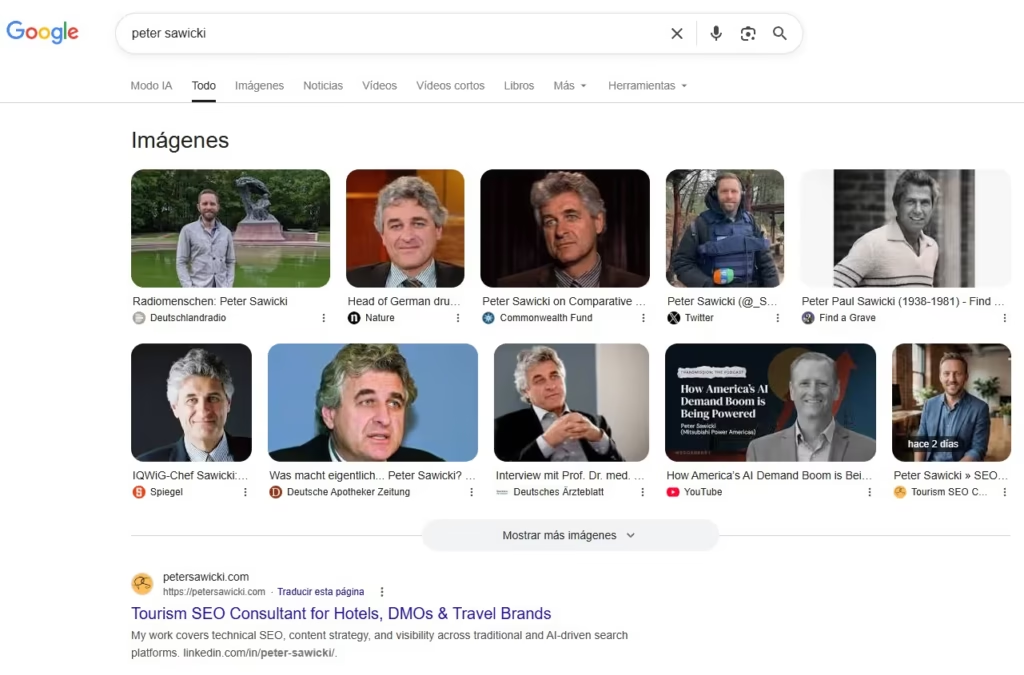
And yet, if you search for “Peter Sawicki” on Google right now, my site sits at number one.
Think about what that means for a second
The domains I am outranking include LinkedIn, a platform with a domain rating most SEO tools cannot even fully measure. IMDB, one of the most authoritative entertainment databases on the planet. Facebook, a site that needs no introduction.
The Commonwealth Fund, a respected healthcare research foundation. Even FindAGrave.com, which has been indexing names and biographical data for decades.
Every single one of these domains has more authority, more backlinks, more content, and more history than petersawicki.com. It is not even close.
I am neither the only one nor the most famous
And it is not like there is a shortage of Peter Sawickis out there competing for that space. Actually, I have a lot of famous people with the same name who, by all SEO standards, should be much more visible than I am.
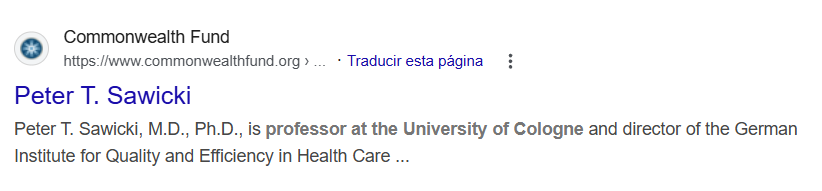
Prof. Dr. Peter T. Sawicki
A professor of medicine at the University of Cologne who founded and directed IQWiG, Germany’s Institute for Quality and Efficiency in Health Care. The man has published research papers, appeared on German television, and shaped national healthcare policy.
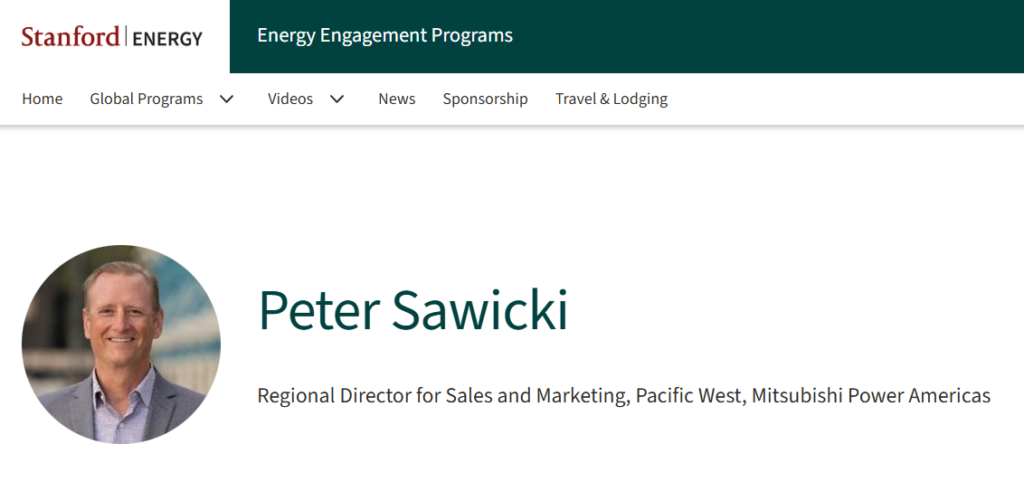
Peter Sawicki, Vice President at Mitsubishi Power Americas
Featured in POWER Magazine, quoted in pv magazine, a speaker at CERAWeek, and with his own profile on stanford.edu. Over 25 years in the power industry and a far more visible name than mine.
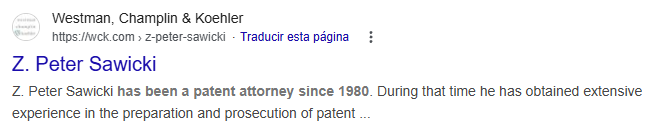
Z. Peter Sawicki, attorney at Westman, Champlin & Koehler
Over 40 years of experience, listed on Super Lawyers, and a regular intellectual property columnist in Attorney at Law Magazine since 2013. His name appears across legal directories, his law firm’s website, and dozens of published articles.
And there is Peter Sawicki from Toledo, Ohio…
A real estate developer who was murdered in 1981 while trying to protect his daughter from an attack by serial killers. However tragic, that story received significant media coverage and has been revisited by journalists multiple times, cementing that Peter Sawicki’s name across news archives and true crime databases far more than anything I have ever done.

An authority I cannot match
All of them have a stronger public profile than I do. All of them appear on domains with massively more authority than mine.
And yet Google decided that petersawicki.com is the number one result.
Why does my exact-match domain actually work?
The same compounding effects I described in the competitor analysis above. My domain is an exact match for my name. Every link to my site naturally uses “Peter Sawicki” as anchor text. My brand and the search query are identical.
Google cannot distinguish between someone searching for me and someone searching for any other Peter Sawicki, and my exact match domain tips the scale in my favor every single time.
No amount of domain authority from LinkedIn or Facebook changes that. The structural advantage of the exact match domain, combined with even minimal content and technical foundations, was enough to beat sites that should be untouchable on paper.
That is not theory. That is a live search result you can verify right now.
There are no results that are 100% white or black
To make this experiment as accurate as possible, I checked the results from different IPs and different geolocations. And of course, the results vary, they have to.
In some locations I rank in the top 3. In others, somewhere within the top 10. In a few, I dropped to the second page. And in one location, I did not show up until page five.
But none of that changes the point. The fact that petersawicki.com appears anywhere near these results, at this stage of the site’s development, with this level of authority, against domains of this caliber – should simply not be happening. And yet it is.

About the Author
I’m Peter Sawicki, a Destination SEO Strategist helping tourism brands and DMOs grow their online presence through SEO, technical audits, and creative digital strategies. Over the years I’ve worked across multiple countries and markets, which gives me a global perspective on every project I take on. When I’m not optimizing websites, you’ll most likely find me underwater. Scuba diving is where my two biggest passions meet.